

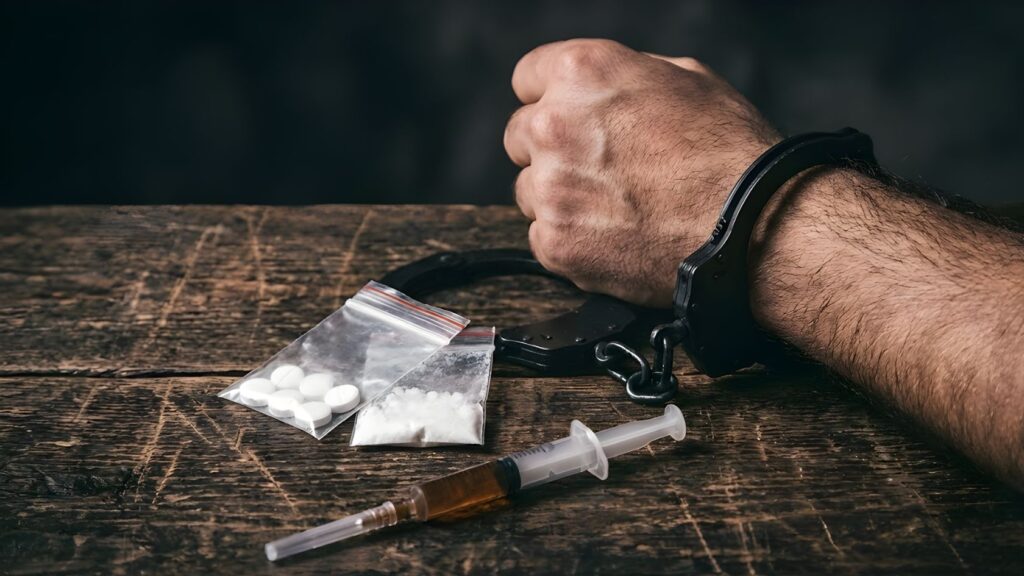
Caught with Drugs on Vacation in Ocean City, MD: Misdemeanor vs. Felony Charges
Ocean City, Maryland is a place people come to relax, unwind, and forget their everyday worries for a few days. For some visitors, that means bringing along marijuana, prescription pills that are not theirs, or other controlled substances. What many do not realize is that Maryland drug laws — particularly as they apply to non-residents caught on vacation — can turn a beach weekend into a criminal matter that follows them home across state lines.
If you or someone you know was arrested or cited for a drug offense in Ocean City, the single most important thing to understand is this: not all drug charges are equal under Maryland law, and the difference between a misdemeanor and a felony can be determined by factors as specific as the weight of a substance, how it was packaged, or what else was found at the time of arrest. Understanding which charges you are facing — and what those charges actually mean — is the first step toward protecting yourself.
This article explains how Maryland classifies drug offenses, what separates a misdemeanor possession charge from a felony distribution charge, what penalties apply, and what defenses are available. If you were arrested for drugs in Ocean City, a local criminal defense attorney can make a critical difference in the outcome of your case.
How Maryland Classifies Controlled Substances
Maryland categorizes controlled substances into Schedules I through V under the Maryland Controlled Dangerous Substances Act, mirroring the federal scheduling system. The schedule of a substance affects the severity of charges and penalties associated with it:
- Schedule I: Substances with high abuse potential and no accepted medical use — including Controlled Dangerous Substances (CDS), and most other hallucinogens. Charges involving Schedule I substances carry the most serious penalties.
- Schedule II: High abuse potential with limited accepted medical use — including Controlled Dangerous Substances (CDS), and similar stimulants and opioids. Possession of Schedule II substances without a valid prescription is a serious criminal offense.
- Schedule III, IV, and V: Lower abuse potential with accepted medical uses — including Prescription medications without a valid prescription, certain pain medications, and anabolic steroids. Possessing these without a valid prescription is still a criminal offense in Maryland, though penalties are generally less severe than for Schedules I and II.
The schedule of the substance you were found with is one of the primary factors that determines whether you face a misdemeanor or felony charge — and what the maximum penalties are.
Marijuana in Maryland: Where the Law Stands in 2024
Maryland legalized recreational marijuana for adults 21 and older effective July 1, 2023. This is a significant development that many visitors are aware of — but the details of what is and is not legal matter enormously, and misunderstanding them has resulted in real arrests in Ocean City.
What Is Legal Under Maryland’s Marijuana Law
Adults 21 and older may legally possess up to 1.5 ounces (42 grams) of marijuana for personal use. Consumption in a private residence is permitted. Purchasing from a licensed dispensary is legal.
What Remains Illegal and Can Result in Criminal Charges
- Possessing more than 1.5 ounces: Possession of between 1.5 ounces and 2.5 ounces is a civil offense carrying a fine of up to $250. Possession of more than 2.5 ounces is a criminal misdemeanor carrying up to 6 months in jail and a $1,000 fine for a first offense.
- Public consumption: Smoking or consuming marijuana in a public place — including the beach, the Boardwalk, in a vehicle, or on a hotel balcony — is a civil offense with a fine of up to $250 for a first offense, escalating for repeat violations. Ocean City actively enforces this.
- Distribution or intent to distribute: Selling or distributing marijuana in any amount without a license is a felony in Maryland. This includes giving marijuana away without payment — distribution does not require a financial transaction under Maryland law.
- Possession with intent to distribute: Even without direct evidence of a sale, large quantities, packaging materials, scales, or cash found alongside marijuana can support a felony charge of possession with intent to distribute.
- Any amount in a vehicle with a minor present: Additional charges and enhanced penalties apply when controlled substances — including marijuana — are found in a vehicle in which a minor is a passenger.
- Persons under 21: Marijuana possession is not legal for anyone under 21. Possession by a minor is a civil offense for small amounts but can escalate to criminal charges depending on quantity and circumstances.
Many visitors arrive in Ocean City having purchased marijuana legally in another state or from a Maryland dispensary — and then make the mistake of consuming it publicly or carrying amounts that exceed the legal possession limit. Understanding these distinctions before and during your visit is critical.
Misdemeanor Drug Possession Charges in Maryland
For most controlled substances other than marijuana, simple possession — meaning possession for personal use with no evidence of intent to distribute — is charged as a misdemeanor under Maryland law. The key statute is Maryland Criminal Law Article § 5-601.
A misdemeanor possession conviction in Maryland carries:
- Up to 4 years in prison and a fine of up to $25,000 for a first offense
- Up to 4 years in prison and a fine of up to $25,000 for subsequent offenses, with the possibility of enhanced sentencing
It is critical to note that Maryland’s misdemeanor possession penalty is significantly more severe than in many other states. The 4-year maximum sentence surprises many defendants who assume a misdemeanor means minimal consequences. In Maryland, it does not. A misdemeanor drug conviction here is a serious criminal matter that warrants aggressive legal defense.
Common drugs that typically result in misdemeanor possession charges in Ocean City include:
- Marijuana (over the legal possession limit)
- Cocaine (small quantities for personal use)
- Heroin (small quantities for personal use)
- MDMA / ecstasy / molly (personal use quantities)
- Prescription medications without a valid prescription
- Psilocybin mushrooms (personal use quantities)
The distinction between a personal use quantity and a distribution quantity — and therefore between a misdemeanor and a felony — is not always obvious and is heavily fact-dependent. This is one of the most critical points at which having an experienced attorney matters most.
Prescription Drug Possession: A Common and Often Surprising Arrest
One of the most frequently misunderstood drug situations in Ocean City involves prescription medications. Many visitors travel with prescription pills — pain medications, anxiety medications, ADHD medications, sleep aids — without realizing that how those medications are carried can determine whether they are arrested.
In Maryland, it is illegal to possess a prescription controlled substance unless:
- You have a valid prescription in your name, and
- The medication is in its original prescription bottle or you can otherwise establish that the prescription is current and valid
Carrying prescription medications loose in a bag, in an unlabeled container, or in a pill organizer — without the prescription bottle or documentation — can result in a possession charge even if the medication is legitimately prescribed to you. And carrying prescription medications prescribed to someone else is a criminal offense regardless of circumstances.
If you were arrested for prescription drug possession in Ocean City and you have a valid prescription, this is a critical fact for your defense attorney. It does not automatically result in dismissal, but it is a significant mitigating factor that can affect the outcome of your case significantly.
Felony Drug Charges in Maryland: When Possession Becomes Distribution
The most serious drug charges you can face in Ocean City are felony charges — specifically, possession with intent to distribute (PWID) or distribution of a controlled dangerous substance (CDS). These are governed primarily by Maryland Criminal Law Article § 5-602 and carry mandatory minimum sentences in many cases.
The penalties for felony drug distribution or PWID in Maryland depend on the substance involved:
Schedule I or II Substances (Controlled Dangerous Substances (CDS)
- First offense: Up to 20 years in prison and fines up to $25,000
- Second offense: Up to 40 years in prison and fines up to $40,000
Marijuana Distribution (Without a License)
- First offense: Up to 5 years in prison and fines up to $15,000
- Second offense: Up to 10 years in prison and fines up to $15,000
Distribution Near a School or Other Protected Zone
Maryland imposes enhanced penalties when distribution occurs within 1,000 feet of a school, or within 300 feet of a playground, recreation center, public swimming pool, or video arcade. Parts of Ocean City’s Boardwalk and surrounding areas may fall within these enhanced penalty zones. If your charges include an enhanced zone allegation, this significantly increases the potential sentence and makes legal representation even more critical.
How Police Determine Intent to Distribute
One of the most important and most contested issues in Ocean City drug cases is how law enforcement establishes that a person possessed drugs with the intent to distribute rather than for personal use. Prosecutors and police rely on a combination of circumstantial factors, including:
- Quantity: The most common factor. There are no bright-line quantity thresholds in Maryland law for most substances, but amounts that exceed what a person would typically use personally create an inference of distribution intent. What constitutes a personal use amount varies by substance and is a frequent point of legal argument.
- Packaging: Drugs found divided into multiple small bags, bindles, or separately packaged units — rather than in a single bulk quantity — strongly suggest distribution intent to prosecutors.
- Scales: The presence of a digital scale alongside drugs is one of the most significant indicators of distribution intent, even if the drug quantity alone might be arguable as personal use.
- Large amounts of cash: Significant cash — particularly in small denominations — found alongside drugs supports a distribution charge in the eyes of law enforcement.
- Text messages: Messages on your phone that suggest buying and selling arrangements can be used as evidence of distribution intent, even if no transaction occurred at the time of arrest.
- Absence of personal use paraphernalia: Paradoxically, the absence of pipes, syringes, or other personal use paraphernalia alongside a drug supply can support an argument that the drugs were intended for distribution rather than personal use.
Understanding what factors the prosecution is relying upon is central to building an effective defense. An attorney experienced in Maryland drug cases will scrutinize every element of the prosecution’s theory of distribution intent and challenge it where the evidence is weak or legally infirm.
Common Defenses in Ocean City Drug Cases
A drug arrest in Ocean City does not mean an automatic conviction. Depending on the facts of your case, one or more of the following defenses may be available:
Fourth Amendment Suppression — Unlawful Search and Seizure
The most powerful defense in many drug cases is a motion to suppress evidence obtained through an unlawful search or seizure. In Ocean City, common suppression arguments include:
- A traffic stop made without reasonable suspicion of a traffic violation
- A vehicle search conducted without consent, a warrant, or a recognized legal exception
- A hotel room search conducted without consent or a valid warrant
- A pat-down or search of your person that exceeded the legal scope of a stop
If the drugs were found as a result of an unconstitutional search, they may be suppressed — meaning they cannot be used as evidence — and the charges may be dismissed entirely. This is one of the most significant reasons why an attorney must review the specific circumstances of your stop and arrest before any plea is entered.
Lack of Possession — Actual vs. Constructive
Maryland law recognizes two forms of possession: actual possession (drugs found on your person) and constructive possession (drugs found in a shared space, such as a vehicle or hotel room, where you had access but the drugs were not on your body). Constructive possession requires the prosecution to prove that you knew the drugs were present, knew they were controlled substances, and exercised dominion and control over them. When drugs are found in a shared vehicle or room with multiple occupants, the prosecution’s constructive possession argument can often be challenged effectively.
Challenging Distribution Intent
In possession with intent to distribute cases, the prosecution must prove that you intended to distribute — not just possess — the substance. An attorney can challenge the quantity interpretation, contest the significance of packaging or other circumstantial factors, and present evidence of personal use to undermine the distribution theory.
Prescription or Authorization Defense
If the substance involved is a prescription medication and you hold a valid prescription, this is a complete defense to a simple possession charge — provided the attorney can establish the prescription’s validity and your authorization to possess the medication.
Chain of Custody and Laboratory Analysis Challenges
The prosecution must prove that the substance found was actually the controlled substance charged. Laboratory analysis must be conducted and documented properly, and the chain of custody from collection to testing must be maintained without breaks. Procedural failures in evidence handling can undermine the prosecution’s ability to prove the substance’s identity.
Drug Diversion Programs in Maryland: An Alternative to Conviction
Maryland offers drug diversion programs for eligible defendants — particularly first-time offenders — that can result in dismissal of charges upon successful completion. These programs typically involve:
- Drug education or treatment program participation
- Regular check-ins or drug testing during a probationary period
- Community service
- Payment of program fees and court costs
Eligibility for diversion depends on the nature of the charges, your criminal history, and the specific program available in Worcester County. Not all defendants qualify, and the pathway into diversion programs is not always clearly marked — it often requires an attorney who knows the local system and how to advocate for your client’s admission to available programs.
Additionally, a Probation Before Judgment (PBJ) outcome — where the judge withholds a formal conviction — may be available for eligible first-time drug offenders. A PBJ avoids a permanent criminal conviction and may be expungeable after the applicable waiting period. Achieving a PBJ requires effective advocacy by an experienced local defense attorney.
How a Drug Conviction Follows You Home Across State Lines
For out-of-state visitors arrested for drugs in Ocean City, the consequences do not stay in Maryland when you leave. A Maryland drug conviction creates a permanent federal criminal record accessible through background checks in every state. Specific downstream consequences include:
- Federal student financial aid: A drug conviction can result in suspension of eligibility for federal student aid under the Higher Education Act. The suspension period depends on the nature of the conviction and whether it involved possession or distribution.
- Professional licensing: Nursing, law, medicine, education, real estate, and dozens of other licensed professions conduct character and fitness reviews. A drug conviction — even a misdemeanor — can delay, restrict, or prevent licensure in many fields.
- Employment: Drug convictions appear on background checks and are among the most common reasons employers decline to hire or promote candidates.
- Housing: Many landlords conduct criminal background checks. A drug conviction can make it significantly harder to rent housing in competitive markets.
- Immigration: For non-citizens — including lawful permanent residents and visa holders — a drug conviction can have severe and sometimes irreversible immigration consequences, including deportation. If you are not a U.S. citizen and you are facing drug charges in Ocean City, contact an attorney immediately.
- Federal firearms rights: A felony drug conviction results in a permanent prohibition on possessing firearms under federal law.
What to Do Right Now If You Were Arrested for Drugs in Ocean City
- Do not make any statements to law enforcement. Invoke your right to remain silent immediately and clearly. Do not attempt to explain the drugs, claim they belong to someone else, or minimize the situation. Everything you say can and will be used against you.
- Do not consent to any additional searches. If police ask permission to search your phone, vehicle, hotel room, or belongings, decline clearly and politely. You have the right to refuse consent to a search.
- Contact a local Ocean City drug defense attorney immediately. The earlier an attorney is involved, the more options are available. Evidence can be reviewed, suppression arguments can be identified, and prosecutors can be engaged before charging decisions are finalized in some cases.
- Preserve all paperwork. Keep every document you receive — the charging documents, any release paperwork, your court date information. Do not lose these.
- Do not miss your court date. A bench warrant will be issued immediately for failure to appear in Worcester County District Court, and that warrant follows you across state lines.
- If you have a valid prescription for any medication involved, locate that documentation. Prescription records, pharmacy printouts, and doctor’s notes are all potentially valuable to your defense.
Frequently Asked Questions — Drug Charges in Ocean City, MD
Is marijuana legal in Ocean City, Maryland?
Recreational marijuana is legal in Maryland for adults 21 and older, effective July 1, 2023, for personal possession up to 1.5 ounces. However, public consumption — including on the beach, the Boardwalk, in vehicles, and on hotel balconies — remains a civil offense. Possession over 2.5 ounces is a criminal misdemeanor. Distribution of any amount without a license is a felony. Ocean City actively enforces these restrictions.
What is the difference between drug possession and possession with intent to distribute in Maryland?
Simple possession is typically a misdemeanor under Maryland Criminal Law Article § 5-601, carrying up to 4 years in prison for most substances. Possession with intent to distribute (PWID) under § 5-602 is a felony carrying up to 20 years for Schedule I or II substances. The distinction is based on factors including quantity, packaging, the presence of scales or cash, and text message evidence — not just the amount of drugs found.
I was arrested with prescription pills that are not mine. How serious is that?
Very serious. Possessing a controlled substance prescribed to another person is a criminal offense in Maryland regardless of your reason for having it. Depending on the substance and quantity, this can be charged as misdemeanor possession or — if the prescription belongs to someone else and you had multiple doses — potentially as possession with intent to distribute. Contact an attorney immediately.
Can drug charges from Ocean City be expunged from my record in Maryland?
Expungement eligibility depends on the outcome of your case. A PBJ or successful diversion program completion may make you eligible for expungement after the applicable waiting period. A conviction for certain drug offenses may also be expungeable after a waiting period under Maryland law. A criminal defense attorney can advise on your specific eligibility after your case is resolved.
I was in a shared hotel room when drugs were found. Can I be charged?
Yes, you can be charged with constructive possession even if the drugs were not found on your person. However, constructive possession requires the prosecution to prove you knew about the drugs and exercised control over them. This is a frequently contested issue in hotel room drug cases, and an experienced attorney can challenge the constructive possession argument effectively in many circumstances.
Does a drug arrest in Ocean City affect my professional license back home?
A criminal conviction for a drug offense in Maryland can affect professional licensing in any state. Most licensing boards — including those for healthcare, law, education, and financial services — conduct character and fitness reviews and may take action based on out-of-state convictions. Pursuing a PBJ or diversion outcome that avoids a formal conviction is critically important for anyone with a professional license or in a licensed profession.
Contact Paul Abu-Zaid — Ocean City Drug Defense Attorney
Being arrested for a drug offense on vacation in Ocean City does not have to define your future. Maryland drug law is complex, the difference between a misdemeanor and a felony can turn on specific facts, and the consequences of a conviction are serious and lasting. You need an attorney who knows the local court, the local prosecutors, and the most effective strategies for protecting defendants charged with drug offenses in Worcester County.
The Law Office of Paul Abu-Zaid has been defending clients against drug charges in Ocean City and Worcester County, Maryland since 2004. Paul is a member of the Maryland Criminal Defense Attorneys Association, a past president of the Worcester County Bar Association, and a trusted local defense attorney with the experience and relationships to fight effectively for your rights.
Paul is available 24 hours a day, 7 days a week. Your first consultation is completely free.
Call now: 410.524.2001
Email: paul@paulabuzaid.com
5700 Coastal Hwy., Suite 201, Ocean City, MD 21842
Do not face Maryland drug charges alone. Call Paul Abu-Zaid today.